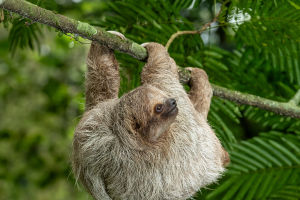
Koalas are often seen as cuddly symbols of the Australian wilderness, but beneath their soft fur lies a suite of surprising adaptations and behaviors that set them apart in the animal kingdom.
Though commonly called “koala bears,” these animals are not bears at all — they are marsupials, a group of mammals that carry and nurture their young in pouches.
Koalas' unique lifestyle — from what they eat to how they move and sleep — reveals a remarkable evolutionary story shaped by their environment and dietary constraints.
Understanding Koalas: What Sets Them Apart
Koalas belong to the marsupial family Phascolarctidae and are native to the eucalyptus forests of Australia. Adults measure about 60–85 centimeters long and can weigh up to 14 kilograms, with their stout bodies, fluffy ears, and broad noses making them easily recognizable. Despite their teddy bear appearance, koalas' physiology and behavior are finely tuned to their habitat.
Koalas spend most of their lives in trees, relying on eucalyptus leaves as both their food source and water supply. Their specialized digestive system enables them to safely process this toxic and nutrient poor foliage — a feat that few other animals can manage.
1. Unique Dietary Adaptations
Koalas are incredibly picky eaters. They feed nearly exclusively on eucalyptus leaves, which are tough, poisonous to most species, and low in nutrients. To extract what little nutrition they can, koalas have a highly specialized gut and a long cecum where symbiotic bacteria break down the toxic compounds.
Because their diet yields so little usable energy, koalas must conserve energy as much as possible — and this shapes many aspects of their lifestyle. Their reliance on eucalyptus also means they rarely drink water, instead deriving most of their moisture from their leafy meals.
2. Sleep and Energy Conservation
A striking and often surprising fact about koalas is their remarkable sleep habits. These marsupials can sleep between 18 and 20 hours a day. This isn't laziness — it's an adaptation to their diet. Eucalyptus leaves take a great deal of energy to break down, and because they provide so little fuel, koalas rest to conserve energy whenever possible.
When not eating or grooming, koalas curl up in the crooks of trees, conserving precious calories and allowing their bodies to cope with a diet that would exhaust many other animals.
3. Marsupial Life and Physical Traits
Koalas' baby animals, known as joeys, are born extremely small and undeveloped — about the size of a jellybean — after a gestation period of just over a month. They then crawl into their mother's pouch, where they continue to grow and develop for several months before emerging.
Koalas possess strong, curved claws and rough pads that help them grip branches securely. These physical features, along with their curved spines and muscular limbs, make them excellent climbers. Their solitary and mostly quiet nature further complements their arboreal lifestyle.
4. Conservation and Future Challenges
Despite their iconic status, koalas face serious conservation challenges. Their status on the International Union for Conservation of Nature (IUCN) Red List is vulnerable, meaning that populations are declining due to habitat loss, climate change, disease, and bushfires. One devastating bushfire season alone — the 2019 2020 “Black Summer” — killed or injured tens of thousands of koalas, illustrating how sensitive the species is to environmental changes.
Preserving eucalyptus forests and expanding protected habitats are critical to ensuring koalas survive into the future. In many regions, efforts to protect forests and rehabilitate injured animals are ongoing, highlighting the growing importance of wildlife conservation.
Conclusion: Lessons from the Koala
Koalas are much more than cute icons. Their unique dietary needs, specialized physiology, and remarkable energy saving behaviors make them a fascinating subject of study for scientists and a powerful symbol for conservation efforts. Observing how such a specialized creature survives in a challenging ecosystem encourages reflection on the delicate balance of nature. Protecting animals like the koala reminds us of the responsibility we share in preserving the planet's biodiversity — not just for their benefit, but for ours as well.