Smartphones now capture a large majority of photos taken globally, and that shift has changed photography at every level.
Photography used to require specialized gear, formal training, and significant financial investment. A decent camera, a set of lenses, and the knowledge to use them were gatekeeping mechanisms that kept serious photography relatively exclusive.
The smartphone changed all of that — not by replacing professional photography, but by making meaningful image-making accessible to anyone with a phone in their pocket.
From Camera Phones to Computational Photography
The early mobile camera era was simple. Grainy, low-resolution images with limited control over settings were suitable for casual snapshots but offered little more than basic documentation. Over time, mobile imaging improved through higher-resolution sensors and multi-lens systems, introducing ultra-wide, telephoto, and macro capabilities within a single device.
A major turning point was computational photography. Instead of relying only on physical optics, modern imaging systems use software-based processing and intelligent algorithms to enhance image quality in ways traditional lenses alone cannot achieve. This enabled portrait-style background separation, simulating depth-of-field effects, and improved low-light performance through multi-frame image processing.
By the mid-2020s, computational photography became a standard feature in modern mobile imaging systems. Scene detection adjusts exposure and color automatically, while multi-frame processing helps reduce noise and improve detail in challenging lighting conditions. High dynamic range imaging also helps balance bright and dark areas within the same frame.
The Democratization of Photography
The most important impact of mobile photography is cultural rather than technical. It has democratized photography, allowing nearly anyone with a smartphone to explore visual storytelling without needing expensive equipment or formal training.
This accessibility has encouraged experimentation with composition, lighting, and perspective. It has also supported the growth of global creative communities where users can share work instantly and receive feedback, helping many develop their skills over time.
As a result, photography has shifted from being a specialized discipline to a widely shared form of everyday communication and creative expression.
What Modern Smartphone Cameras Can Do
Modern smartphones now offer capabilities that were once limited to advanced camera systems. Larger sensors improve performance in low-light environments, while optical stabilization reduces blur caused by movement. Multi-lens setups provide different focal lengths, allowing greater flexibility in framing subjects.
Many devices also support RAW image capture, giving users more control during post-processing. Computational features such as real-time scene recognition, automatic exposure balancing, and intelligent focus tracking further enhance usability.
These advancements make smartphones especially effective for candid, street, and documentary-style photography, where speed and discretion are important.
Where Phones Still Fall Short
Despite major progress, limitations still exist. Smaller sensors cannot fully match the performance of larger imaging systems in extremely low-light or high-contrast environments. Noise levels increase more quickly when image data is pushed beyond optimal ranges.
Optical zoom capabilities are also more limited compared to specialized long focal-length lenses. While digital enhancements help, they cannot fully replicate the precision of dedicated optical systems.
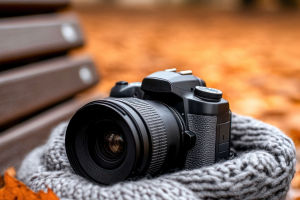
Manual control is improving, but it remains less tactile and precise compared to traditional camera controls. For this reason, many photographers continue to use both tools — smartphones for convenience and immediacy, and dedicated cameras for demanding technical work.
Mobile photography has redefined how images are created and shared. It has expanded photography beyond specialized practice into an everyday form of expression, enabling more people to participate in visual storytelling than ever before. As technology continues to evolve, the relationship between mobile devices and traditional imaging systems will keep developing, further shaping the future of photography.