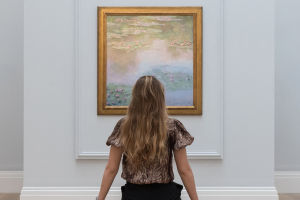
Most people spend only a few seconds looking at a painting, photograph, or sculpture before moving on. However, staying with one artwork for ten full minutes can create a very different experience.
As attention slows down, small details become clearer, emotions become stronger, and new meanings often begin to emerge. This practice, known as slow looking, encourages a deeper and more personal connection with art.
The First Glance
When we first look at an artwork, our eyes usually notice the strongest visual elements. Color, contrast, size, and the main subject immediately attract attention. This quick impression helps us recognize what we are seeing, but it rarely reveals the full richness of the work.
At this stage, many viewers believe they have already understood the artwork. In reality, the first glance is only the beginning. The deeper discoveries often appear after the initial reaction has passed.
What Changes During Ten Minutes?
Extended observation tends to move through several stages. First, we identify what we are seeing. Next, we begin to observe more precisely, asking what is happening within the artwork. After that, interpretation develops as we consider why certain choices were made and how they affect us as viewers.
By the later minutes, memories, emotions, questions, and personal associations may become part of the experience. The artwork itself has not changed, but our relationship with it has. Attention shifts from a quick scan of the surface to a deeper engagement with detail, structure, and feeling.
Discovering Hidden Details
As we continue looking, subtler features begin to emerge. We may notice repeated shapes, the direction of light, the balance between empty and filled space, or the way texture influences the mood of the work. These details are often easy to miss during a brief visit.
Careful observation can also reveal connections between different parts of the artwork. A small gesture in one corner may echo a larger form elsewhere, creating a sense of unity that was not obvious at first.
Why Careful Observation Matters
In galleries and museums, visitors are surrounded by many works competing for attention. As a result, viewing can become fragmented. Slow looking encourages a different approach: choosing depth over quantity. A single artwork explored with patience may leave a stronger and more lasting impression than dozens viewed in quick succession.
This practice can also make art feel more accessible. It does not require specialized vocabulary or expert knowledge. It begins with simple observation. By trusting what they genuinely see, viewers often become more confident in their own responses.
The Value of Uncertainty
Not every artwork offers an immediate explanation, and that is often part of its value. When we resist the urge to find a rapid answer, we become more open to different possibilities. Small visual clues, contrasts, and tensions become easier to notice.
In many cases, the goal is not to solve the artwork but to understand it more fully. Allowing space for uncertainty can lead to a richer and more thoughtful experience.
How to Practice Slow Looking
Choose one artwork and commit to spending ten uninterrupted minutes with it. Begin with the overall composition, then allow your eyes to move slowly across the work. Notice shadows, edges, repeated forms, expressions, empty spaces, and relationships between colors.
Ask yourself a few simple questions:
- What attracts my attention first?
- What details did I miss at the beginning?
- What mood is emerging?
- What appears intentional?
If your mind wanders, gently return your attention to the artwork. This is a normal part of sustained observation.
Returning to the Same Artwork
Revisiting an artwork can be surprisingly rewarding. After reading a description or hearing another interpretation, you may notice elements that escaped your attention before. New information often expands your understanding rather than replacing your original response.
The most rewarding aspect of slow looking is that it continues to unfold with time. Each return offers an opportunity to see something new.
In front of a painting, photograph, or sculpture, ten minutes can be far more significant than it sounds. Slow looking transforms viewing from a brief visual encounter into a deeper act of attention. It helps us notice more, think more carefully, and connect more personally with what we see.
In a fast-moving world, the simple decision to look longer may be one of the most powerful ways to experience art with greater clarity, appreciation, and lasting meaning.