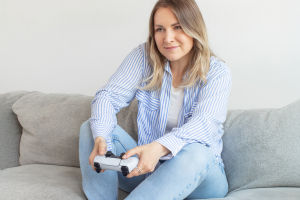
Gaming can serve purposes beyond entertainment, including social connection, mental health support, education, and rehabilitation.
Carefully designed gaming experiences can encourage participation in therapeutic activities, support communication, and help people remain engaged with rehabilitation exercises.
Gaming Can Support Social Connection
Gaming can provide opportunities for communication, cooperation, and shared activities. Multiplayer experiences allow players to interact with other people while working toward common objectives, which can support social engagement.
For people who have difficulty with traditional social situations, structured gaming environments may provide another setting for communication and interaction. Online communities can also help players maintain social connections when meeting in person is difficult.
The benefits depend on how gaming is used. A healthy gaming routine should leave enough time for sleep, physical activity, responsibilities, and offline relationships.
Games Can Support Mental Health Activities
Interactive games can be used in programs that focus on areas such as coping skills, attention, motivation, and participation. Their interactive format allows users to take an active role in completing tasks instead of simply receiving information.
Gaming can also make certain therapeutic activities more engaging by providing clear objectives and immediate feedback. These features may encourage continued participation when an activity involves repeated practice. Gaming should not replace professional mental health care when someone needs clinical support. Its role is better understood as a potential additional activity within an appropriate support program.
David Drummond, an assistant professor at Necker-Enfants Malades Hospital at the University of Paris, has noted that video games can be used in healthcare and are already included in some treatment programs. He emphasizes that games work best as part of a broader approach that includes more traditional interventions.
Gaming Has Applications in Rehabilitation
Game-based technology is also being used to support rehabilitation, including activities that can be completed outside traditional clinical settings. Rehabilitation may involve repeated exercises, and maintaining participation can be difficult when activities become routine.
Game-based systems can add goals, feedback, progress indicators, and rewards to physical exercises. These features can make repeated activities more structured and provide users with clear information about their progress.
Interactive rehabilitation systems have been explored for people recovering from neurological conditions, cardiovascular conditions, musculoskeletal injuries, and other long-term health conditions. Remote rehabilitation can also allow selected activities to be completed at home while supporting continued participation in a structured program.
Choosing Gaming for a Health Purpose
The appropriate gaming experience depends on the intended purpose and the user's abilities. A health-focused system should have controls that match the required activity, while the difficulty should remain appropriate for the person's current level.
Session length also matters. Longer play is not automatically more useful, particularly when gaming is part of a rehabilitation or therapeutic routine. Following the recommended schedule for the specific activity can help keep gaming connected to its intended purpose.
Online features may be useful when communication and social interaction are part of the goal. Offline experiences may be more suitable when the main objective involves individual practice or concentration.
Gaming can support well-being when it is connected to a clear purpose and used in a balanced way. The practical choice is to select an experience that matches the intended activity, keep sessions appropriate, and treat gaming as a complement to suitable professional or rehabilitation support rather than a replacement for it.